D&PS – D&PS June 2025 Column
Dr. Chang-hwan Cho of Dong-An Joongsim Clinic contributed a column to the June 2025 issue of D&PS magazine titled “2017–2025 Aesthetic Medicine Trends: Facial
Aesthetics – Structure, Perception, and Treatment.”
-Column Content-
Recently, aesthetic medicine has evolved beyond simple cosmetic enhancement to focus on anatomical structures, brain perception mechanisms, and the scientific
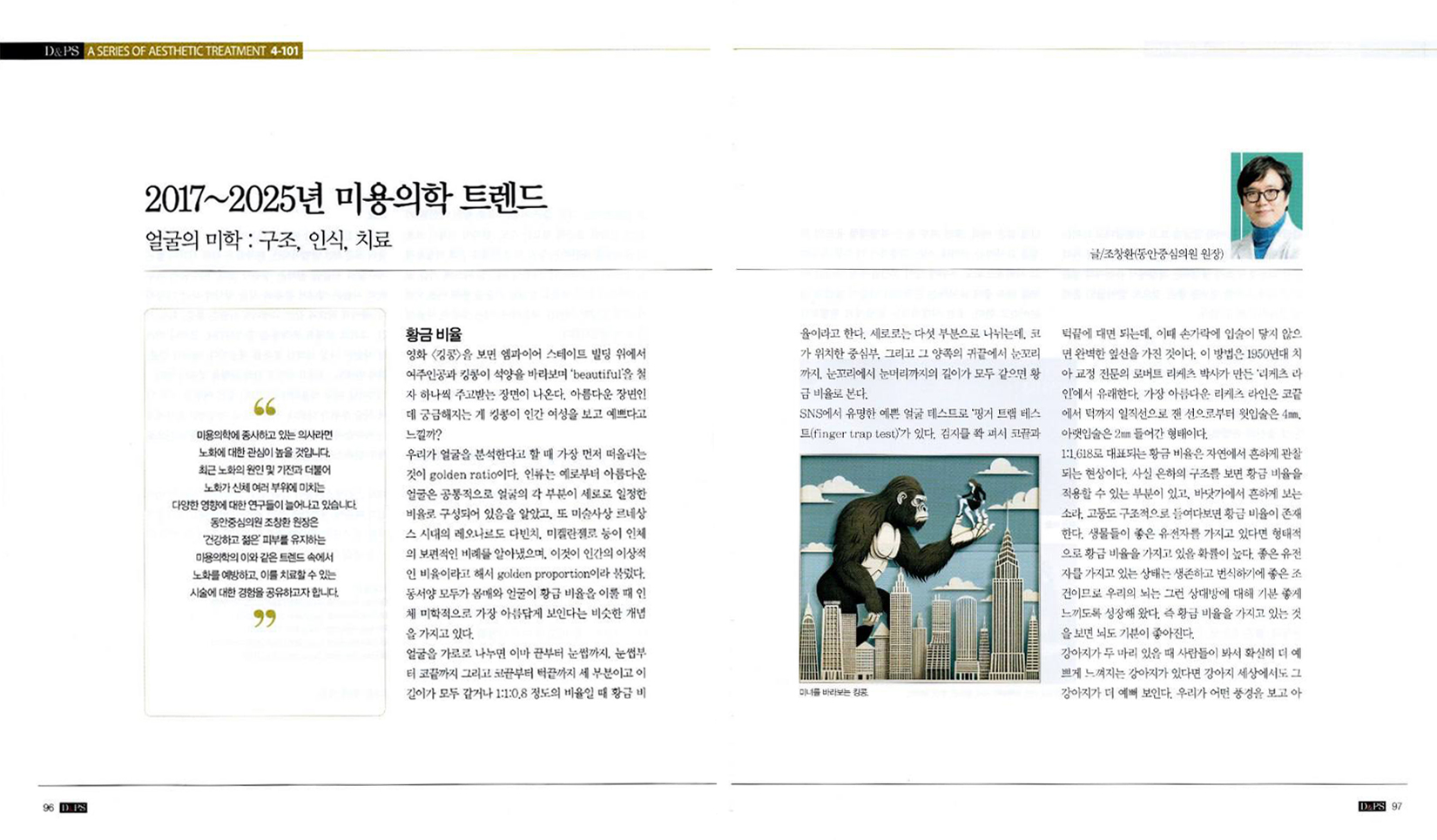
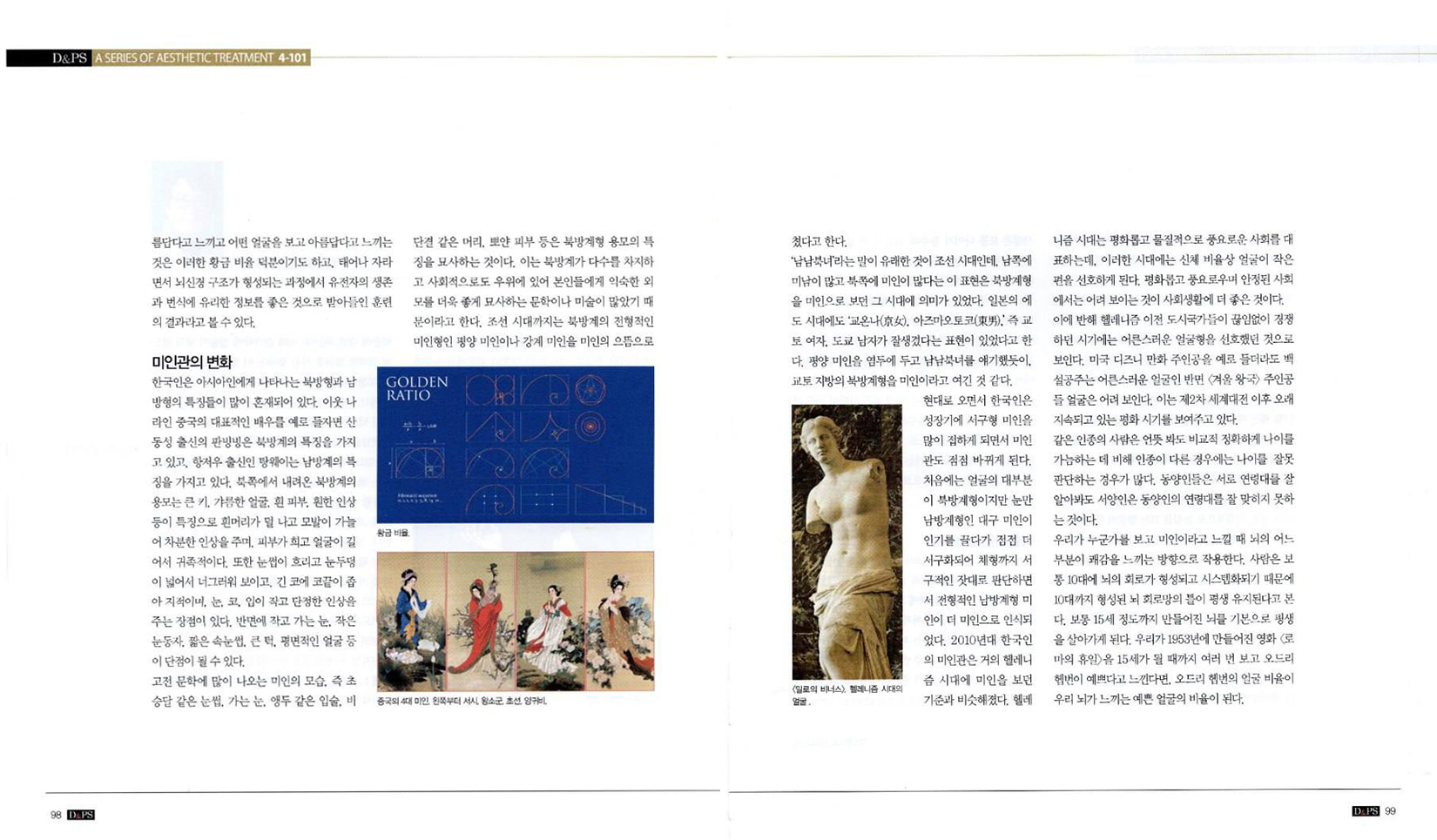
understanding of aging. Humans are instinctively drawn to faces that approximate the golden ratio (1:1:0.8), but our sense of beauty has changed across eras and
cultures. For example, in the Joseon Dynasty, a round and full face was considered beautiful, while today, a more three-dimensional and balanced facial structure
is preferred. The position and angles of the eyes, nose, and mouth, along with the distribution of facial volume, play decisive roles in what the brain judges as
attractive. Aging begins in the late 20s, leading to thinning of the dermis, redistribution of fat, and relaxation of muscles and ligaments. Notably, lower-face
(jowl) sagging and the formation of marionette lines result from structural changes such as weakening of the mandibular ligament and downward migration of fat.
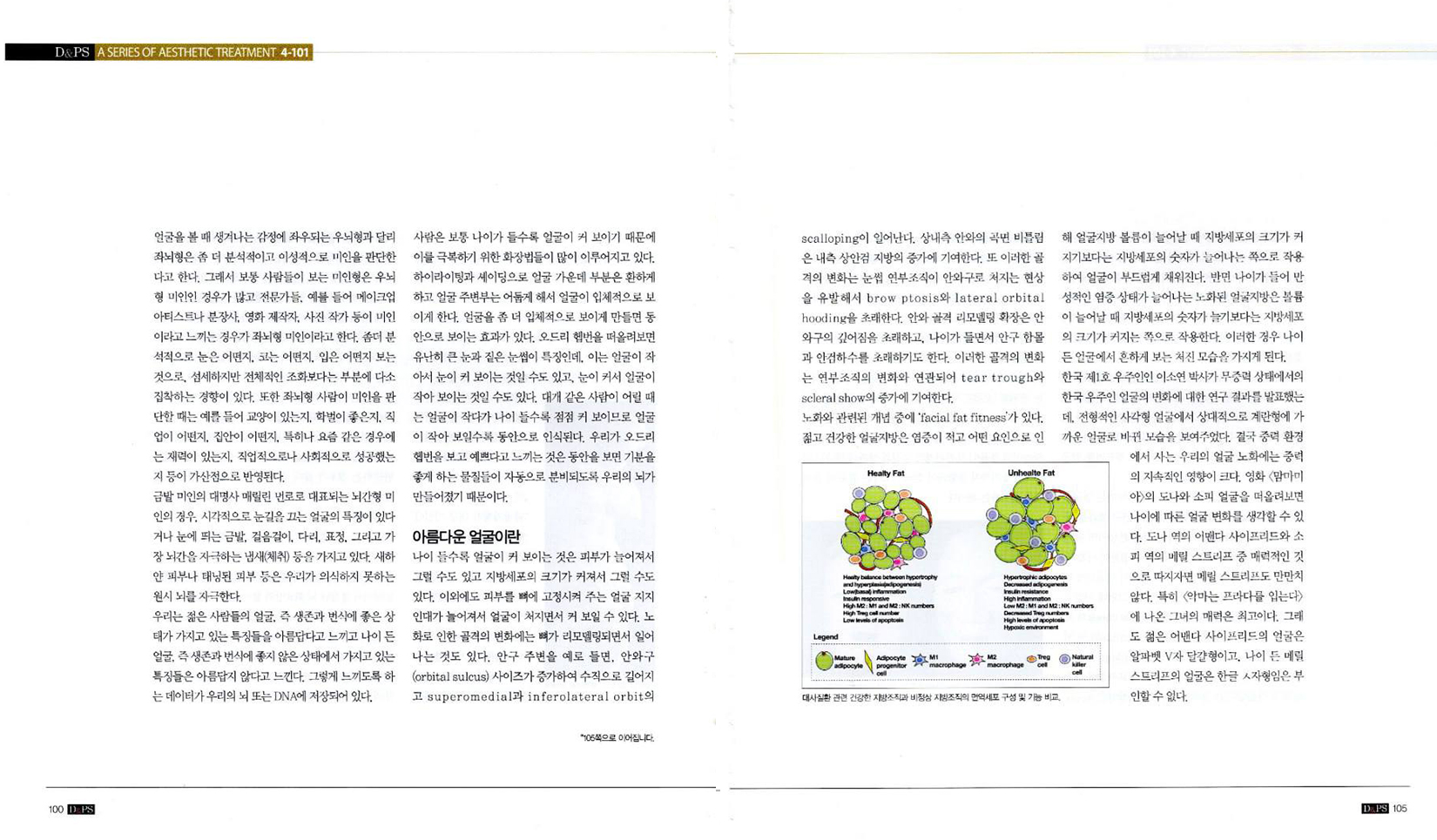
A healthy, youthful face features a balanced distribution of fat cells, but as aging progresses, the number of fat cells decreases while their size increases, giving
the face a heavier, more fatigued appearance. As a result, there is growing interest in the concept of “Facial Fat Fitness,” which considers not only the volume
of fat but also its quality. Ultimately, beauty is shaped by a blend of structural proportions, expressive capacity, skin elasticity, and patterns of
neural preference. Modern aesthetic medicine is no longer simply about filling or sculpting the face, but about restoring anatomical harmony and youthful
dynamics through precise, science-based approaches.