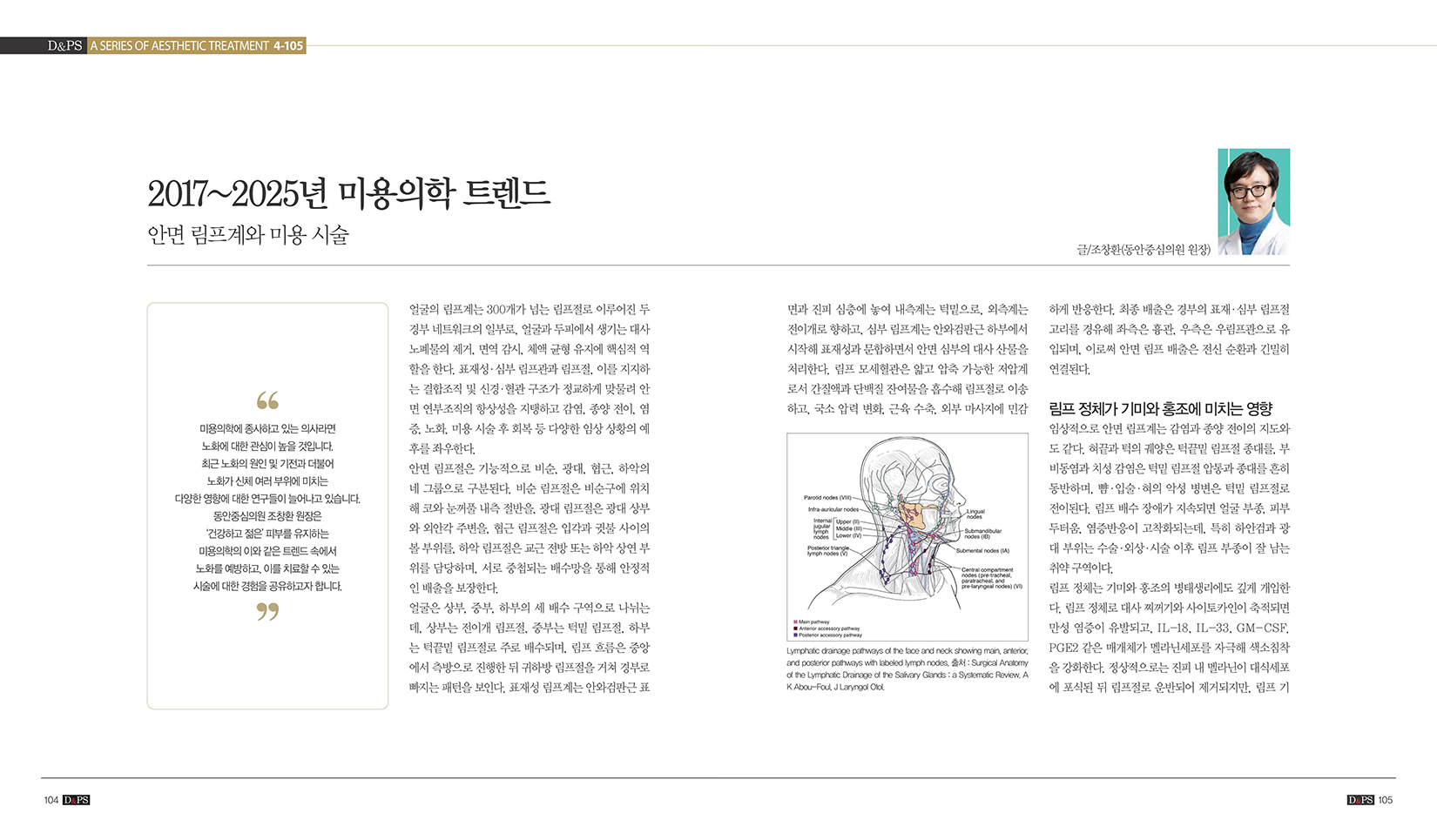
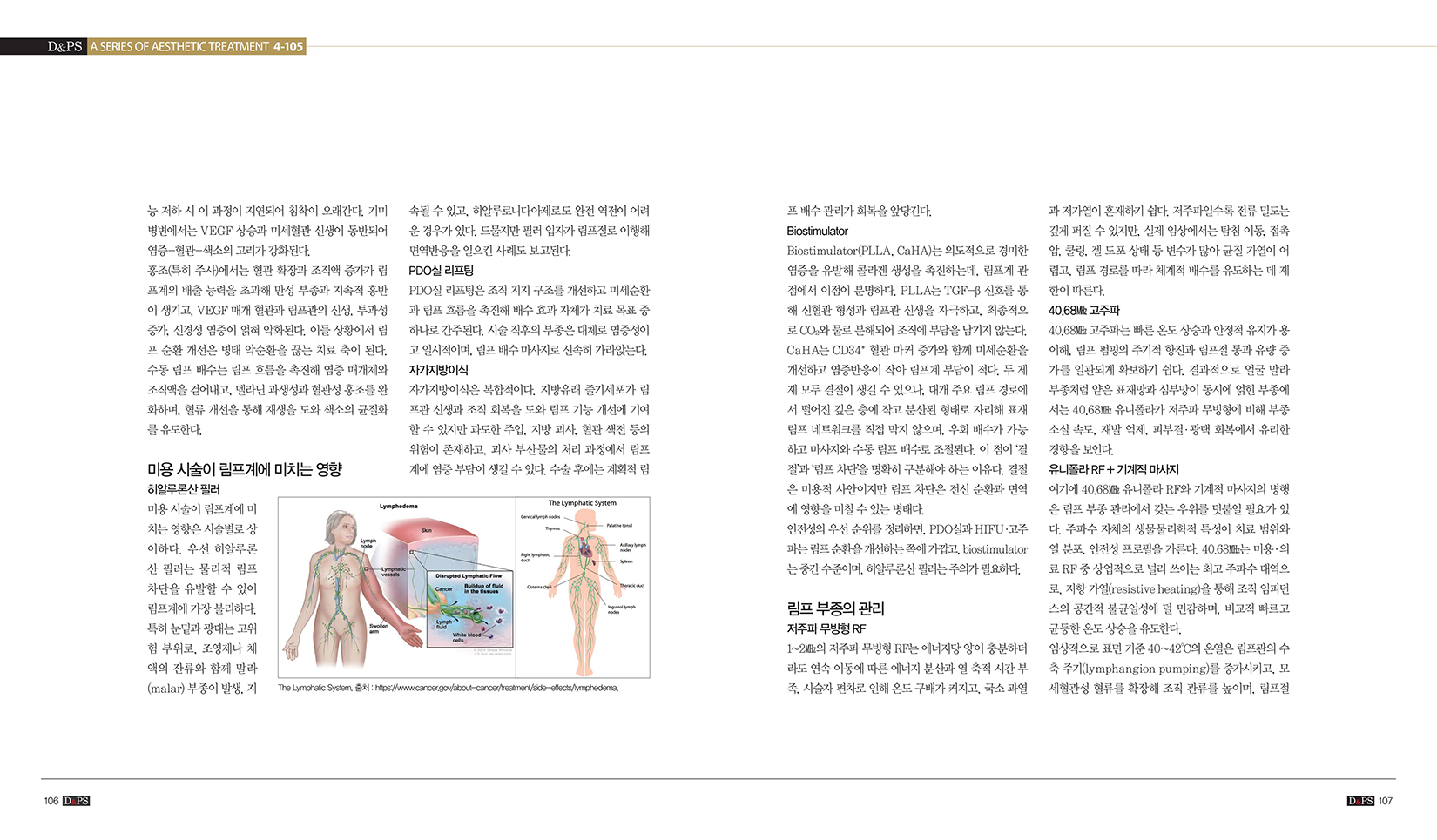
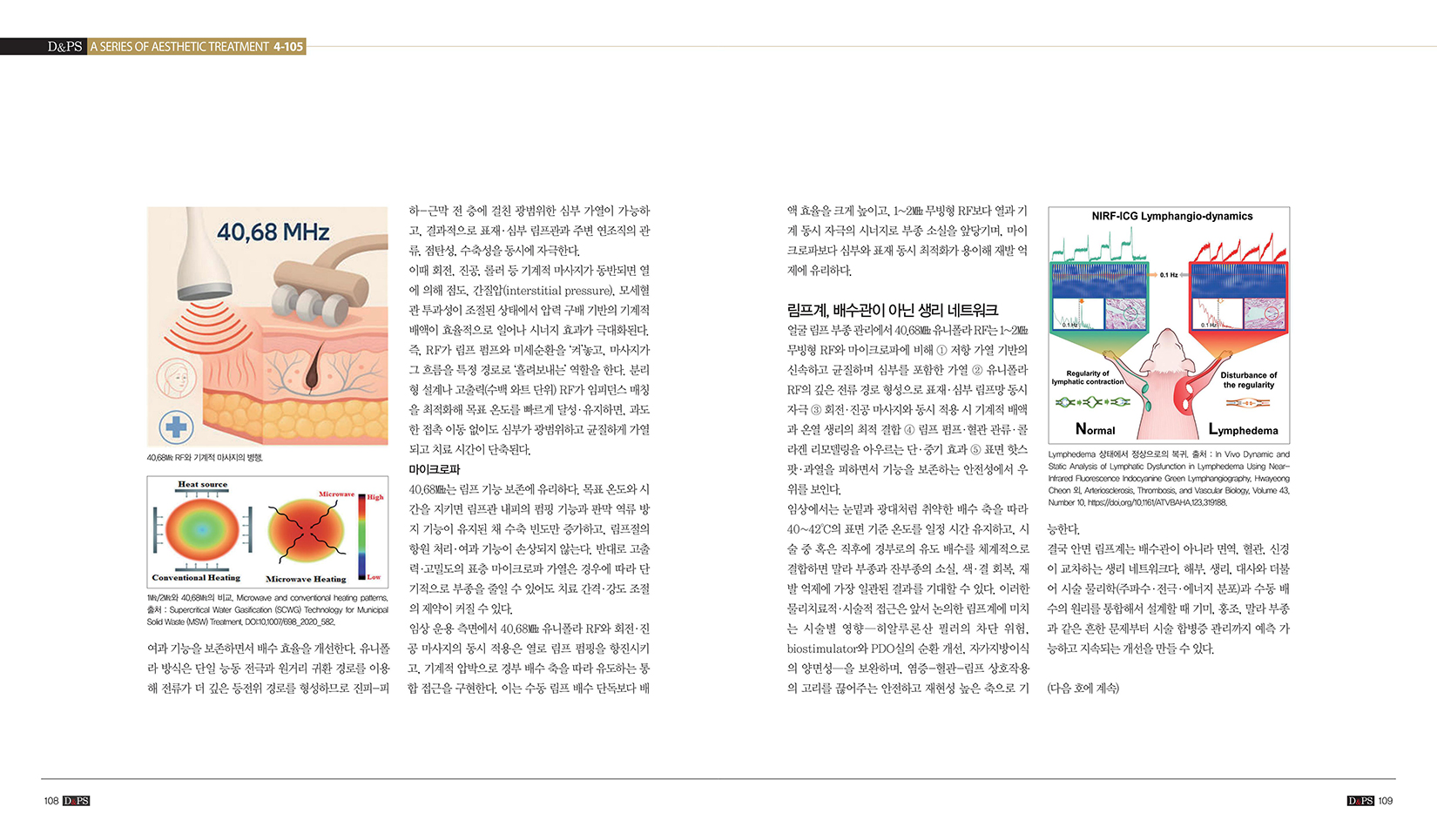
D&PS – D&PS October 2025 Column
Dr. Chang-hwan Cho of Dong-An Joongsim Clinic contributed a column to the October 2025 issue of D&PS Magazine, titled “2017–2025 Aesthetic Medicine Trends:
The Correlation Between the Facial Lymphatic System and Aesthetic Procedures.”
-Column Summary-
The facial lymphatic system is a complex physiological network where immune, vascular, neural, and metabolic functions intersect. More than 300 lymph nodes of the cervicofacial
region maintain the balance of fluid movement, inflammation control, and metabolic clearance. Because of this, lymphatic flow plays a decisive role in melasma, erythema, facial edema,
skin laxity, and post-procedural recovery. Facial lymphatic drainage follows a structured anatomical route: the upper face drains into the preauricular nodes, the midface into the
submandibular nodes, and the lower face into the submental nodes, before ultimately reaching the cervical lymph nodes and the thoracic duct. When this drainage pathway becomes
stagnant, chronic edema, microcirculatory disturbance, uneven hyperpigmentation, and prolonged inflammation can arise. The infraorbital and malar regions are particularly prone to
lymphatic stasis after surgery, trauma, or aesthetic procedures. In conditions such as melasma and rosacea, impaired lymphatic function can increase inflammatory mediators—including IL-18,
IL-33, GM-CSF, and PGE₂—leading to symptom exacerbation. Under normal conditions, melanin is phagocytosed by macrophages and cleared through lymphatic channels; however, reduced
lymphatic function results in pigment retention and recurrent darkening. Different aesthetic procedures influence the lymphatic system in distinct ways.
Hyaluronic acid fillers may physically obstruct lymphatic flow in areas such as the tear trough and malar region, causing persistent malar edema. PDO thread lifting can enhance microcirculation
and support tissue architecture, promoting improved lymphatic movement. Biostimulators such as PLLA and CaHA facilitate angiogenesis and lymphangiogenesis, contributing to better perfusion,
while autologous fat grafting may increase lymphatic burden through risks of fat necrosis. Energy-based devices also show notable differences. Low-frequency (1–2 MHz) moving-type RF devices
generate uneven thermal distribution, limiting their effect on lymphatic pumping. In contrast, 40.68 MHz unipolar RF provides rapid and stable thermal elevation, optimizing lymphatic activation,
capillary dilation, and overall tissue perfusion. When combined with mechanical techniques such as rotation, vacuum, or roller massage, thermal activation followed by directed mechanical propulsion
toward the cervical region produces the most reproducible and effective drainage outcomes. Dr. Cho emphasized that the facial lymphatic system is “an integrated immune–vascular–neural–metabolic
structure essential for the success of aesthetic treatments.” He underscored the importance of lymph-centered treatment planning in addressing melasma, erythema, malar edema, and persistent post-
procedural swelling, highlighting the need for anatomically grounded, physiologically informed aesthetic care.