D&PS – D&PS November 2025 Column
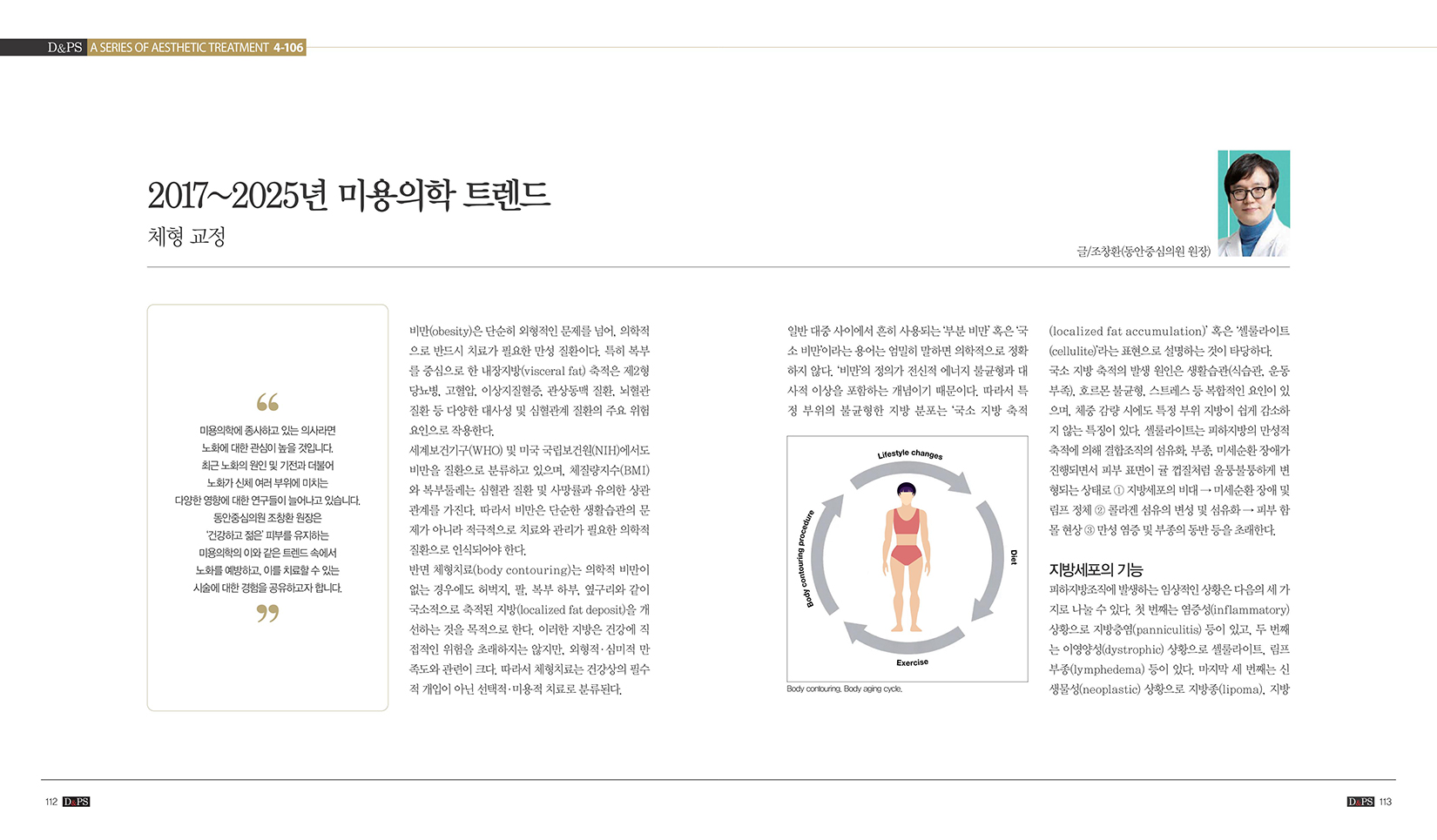
Dr. Chang-hwan Cho of Dong-An Joongsim Clinic contributed a column to the November 2025 issue of D&PS Magazine, titled “2017–2025 Aesthetic Medicine Trends:
Understanding Body Contouring and Fat Metabolism.”
-Column Summary-
The term “localized obesity” is, strictly speaking, not medically accurate, as obesity refers to a systemic disease involving whole-body energy imbalance and metabolic dysfunction.
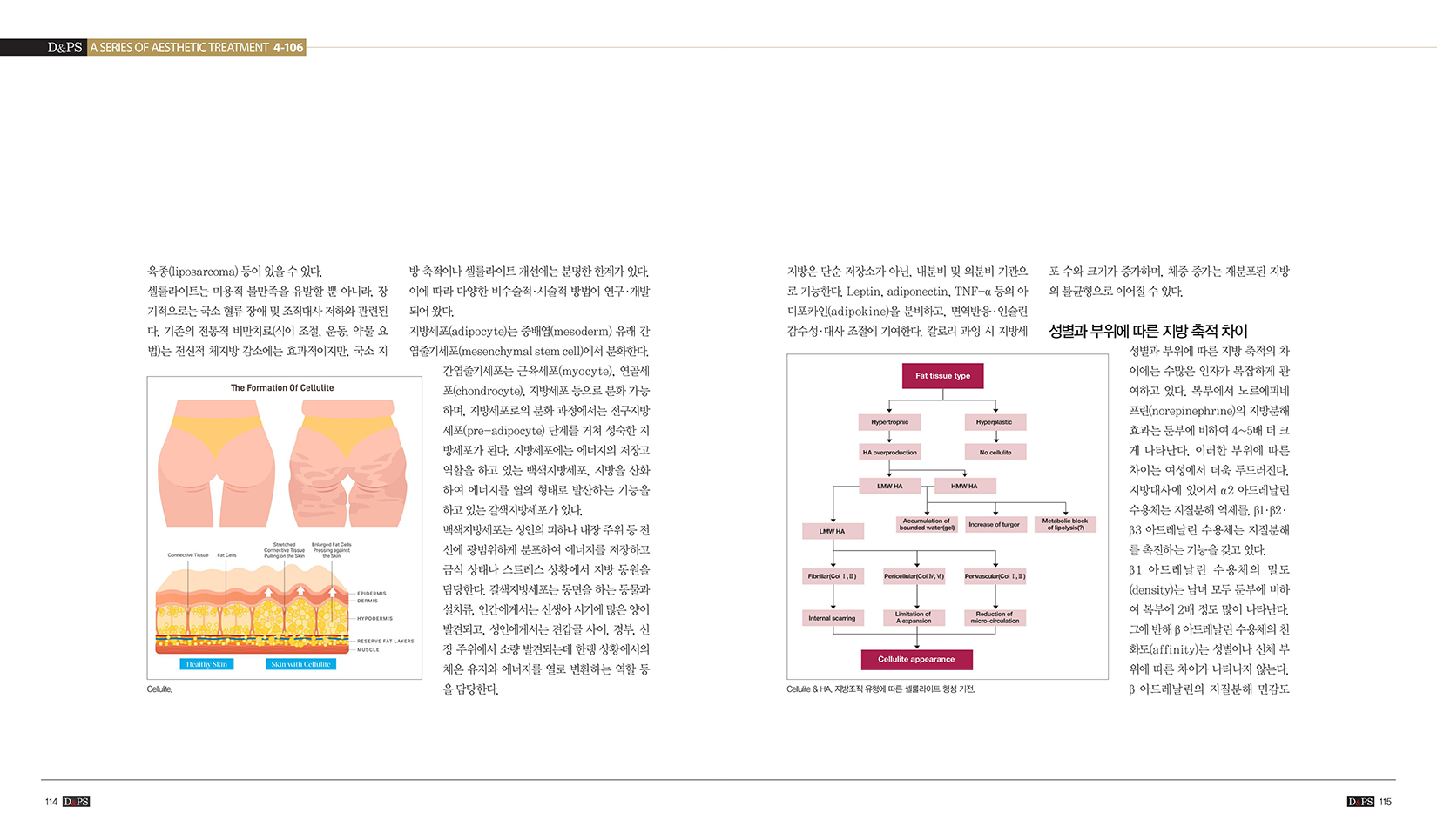
Therefore, fat accumulation in specific areas is more appropriately defined as “localized fat accumulation” or “cellulite.” Cellulite is a complex condition in which chronic accumulation
of subcutaneous fat is accompanied by fibrosis of connective tissue, edema, and microcirculatory impairment. This progression follows a cycle: adipocyte hypertrophy → microcirculation
disturbance → collagen fiber degeneration and fibrosis → skin dimpling → chronic inflammation and edema. Because traditional weight loss, diet, and exercise alone are limited in improving
localized fat or cellulite, non-surgical body contouring treatments have evolved to meet aesthetic demands.
Dr. Cho distinguishes clearly: “Obesity is a medical disease, but body contouring is an elective treatment focused on aesthetic satisfaction.” He emphasizes the importance of a systematic treatment
approach grounded in the physiological functions of fat cells and the sex- and region-specific characteristics of fat distribution.
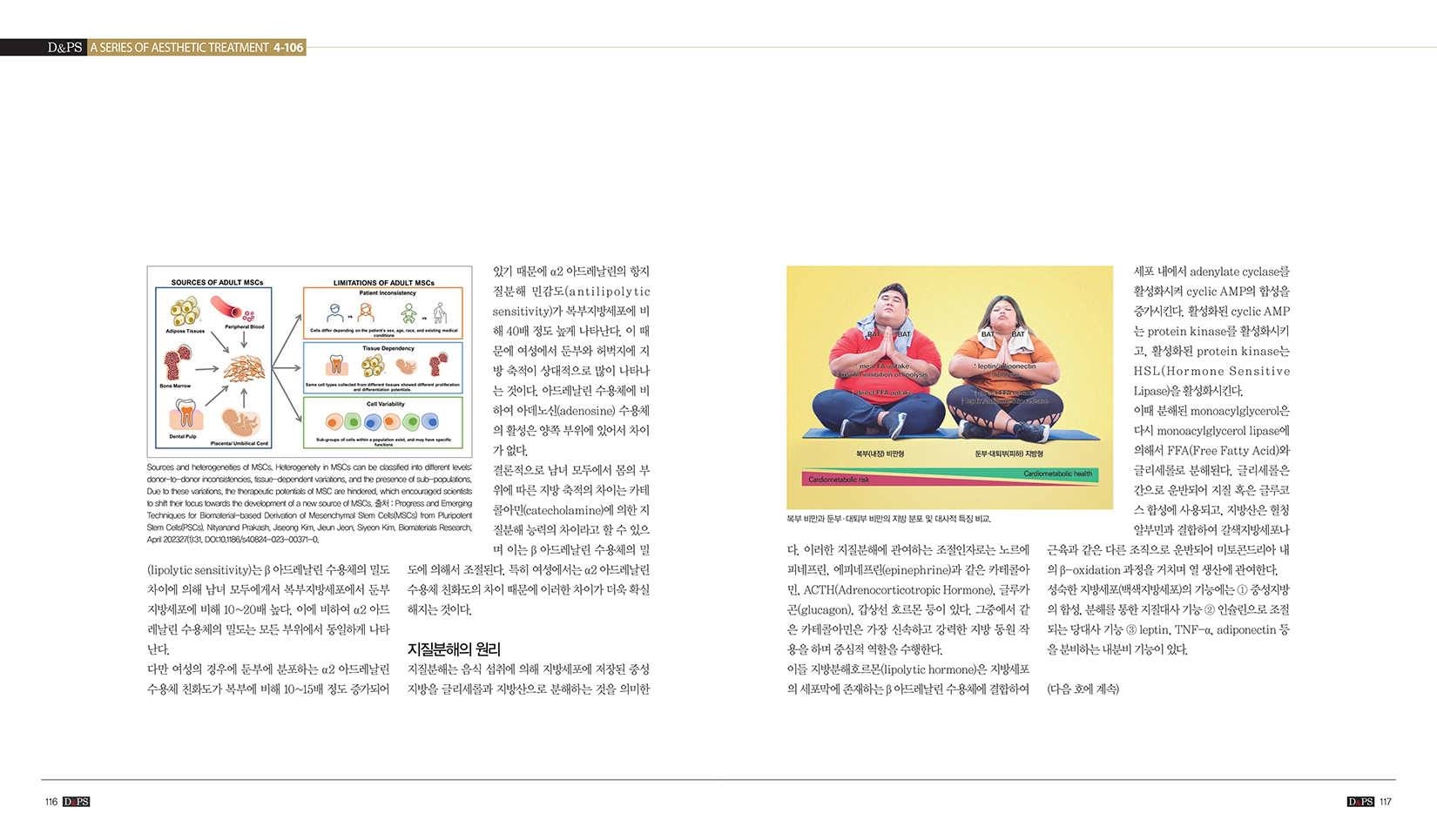
Regarding fat metabolism regulation, he explains that hormones such as norepinephrine, epinephrine, ACTH, glucagon, and thyroid hormones play critical roles. A key pathway involves activation of
β-adrenergic receptors, leading to: cyclic AMP → protein kinase activation → HSL (Hormone-Sensitive Lipase). Through this mechanism, triglycerides break down into glycerol and free fatty acids (FFA),
which are then utilized for energy production.
Dr. Cho also highlights sex-based differences in fat distribution:
• Men exhibit higher lipolytic efficiency in the abdominal region, whereas
• Women tend to accumulate fat more easily in the hips and thighs due to the high anti-lipolytic sensitivity of α₂-adrenergic receptors.
He concludes that the density and affinity of fat receptors are fundamental determinants of individual body-shape characteristics. Dr. Cho defines the goal of body-contouring treatments not merely
as “fat reduction,” but as: “reactivating tissue metabolism, restoring adipocyte function, and re-establishing harmonious body contours.” He underscores the importance of an integrated treatment strategy
that reflects the pathophysiology of obesity, cellulite, and localized fat accumulation.